
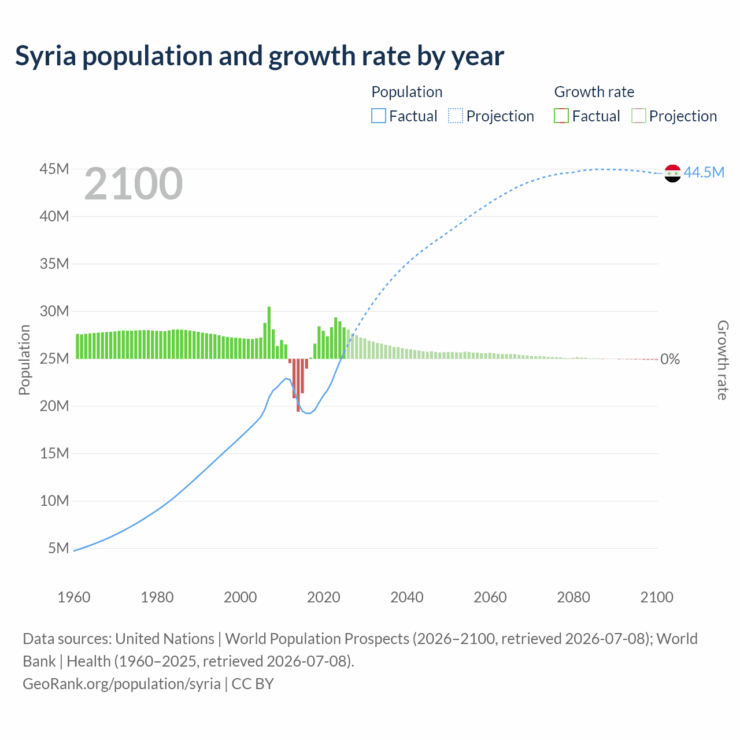
The 2009 Syrian Statistical Yearbook’s Chapter 2, “Population and Demographic Indicators”, sets out Syria population indicators 2009: official population estimates, natural increase, fertility and mortality indicators, and governorate-level data through 2009. The Central Bureau of Statistics (Syria) published it. These pre-2011 figures should be paired with UN estimates for later years. The chapter itself serves as the reference point for verifying citations rather than a reproduction of its contents.
What Chapter 2 Covers
The chapter titled “Population and Demographic Indicators” in the Syrian Statistical Yearbook 2009 summarises the Central Bureau of Statistics’ population data up to that year. It brings together population estimates, natural increase, crude birth rate, crude death rate, total fertility rate, age-sex distribution, and governorate-level tables. The coverage is national, organised by governorate rather than by district. Official figures reflect administrative records, sample surveys, and the 2004 census base. Researchers citing a figure should check the chapter’s table and methodology notes before quoting it.
Population and Growth Indicators, 2000–2009
The chapter reports Syria population growth 2009 official figures for 2000 to 2009. The table below summarises what each indicator measures and how it is expressed, using the chapter’s definitions rather than reproduced values. “Coverage note” indicates the limits of the official series.
| Indicator | What it measures | How expressed | Coverage note |
|---|---|---|---|
| Total population estimate | Resident population at mid-year, excluding Syrians abroad long-term | Number of persons | National and governorate-level; years under government control through 2009 |
| Natural increase | Births minus deaths over a year | Number and rate per 1,000 | Based on registered events; may undercount unregistered births and deaths |
| Crude birth rate | Live births per 1,000 residents in a year | Rate per 1,000 population | Official registration areas only |
| Crude death rate | Deaths per 1,000 residents in a year | Rate per 1,000 population | Same registration limits as the birth rate |
| Total fertility rate | Average number of children per woman if current rates held | Children per woman | Model-based estimate from survey data |
| Age-sex distribution | Population shares by age group and sex | Percentage and population pyramid | Governorate and national level; 2004 census age structure as base |
What the table does not cover
The official series stops where administrative reporting stops. The indicators do not cover internally displaced persons, refugees abroad, or areas outside government control during 2000–2009. They also do not estimate the effects of the conflict that followed 2011. A figure from Chapter 2 is therefore an official pre-2011 record, not a description of Syria’s current population. Post-2011 changes require UN estimates instead.
Chronology of Official Population Data, 2000–2009
- 2004: Syria holds its General Census of Population and Housing; the count becomes the base for later estimates and projections.
- 2005–2008: Statistical abstracts update population indicators annually, adjusting estimates to the 2004 census base.
- 2009: The Statistical Abstract 2009 includes Chapter 2, “Population and Demographic Indicators”, summarising the official series through that year.
Each abstract should be cited by its own year because indicator definitions were occasionally revised. The population series underpins later analysis of the labour force and population development in Syria’s economy.
How to Cite Chapter 2
Cite the chapter as a published government source, not as LevantStats data. A workable reference is: Central Bureau of Statistics (Syria), Statistical Abstract 2009, Chapter 2: Population and Demographic Indicators (Damascus, 2009). If a table number is available, add it after the chapter title. Specify the chapter and indicator so that another researcher can locate the same figure. No stable URL replaced the yearbook, so the printed reference remains the clearest identifier.
Where Official Figures Stop: UN Estimates After 2011
Official figures put Syria’s population indicators on an administrative basis that did not survive the conflict. After 2011, reporting gaps widened, and the Bureau could no longer produce the same national series. UN estimates range beyond those official years.
The UN Population Division’s World Population Prospects 2024 provides modelled population figures for Syria, including the conflict period. The World Bank compiles the same series in its Syria population total indicator, useful for comparing official pre-2011 values with later UN revisions. The UN series is based on demographic modelling and may differ from administrative counts. The yearbook reports registered events, while UN estimates adjust for underreporting and displacement. A citation to Chapter 2 should state the reference year clearly; for any year after 2011, cite the UN estimate rather than the yearbook.
For the economic effects that followed the demographic break, see the discussion of Syria’s later economic crisis.
Background: The 2004 Census Base
The 2004 Syrian census, formally the General Census of Population and Housing 2004, is the reference point behind most population figures in the 2009 abstract. The Bureau used its results to calibrate yearly estimates and to build the age-sex distributions that appear in Chapter 2. Researchers looking for Central Bureau of Statistics Syria population 2009 data should start with the chapter, not with later summaries. For more on the Bureau’s role, see how the Central Bureau of Statistics works. A population indicator cited to 2009 is an update of the 2004 base, adjusted for births, deaths and migration recorded by administrative sources.
Frequently Asked Questions
What does Chapter 2 of Syria’s 2009 Statistical Yearbook contain?
Population and demographic indicators published by the Central Bureau of Statistics through 2009.
Who published Syria’s 2009 population indicators?
The Central Bureau of Statistics (Syria), in the Statistical Abstract 2009, Chapter 2.
Are Syria’s 2009 population indicators reliable after 2011?
They remain valid as official pre-2011 figures; for post-2011 use UN estimates instead.
Where can the 2009 chapter be read?
The official source is the Statistical Abstract 2009, Chapter 2, published by the Central Bureau of Statistics (Syria); it is not hosted elsewhere.
Sources
- Central Bureau of Statistics (Syria), Statistical Abstract 2009, Chapter 2: Population and Demographic Indicators (Damascus, 2009).
- UN Population Division, World Population Prospects 2024.
- World Bank, Syria population total.

Published by