
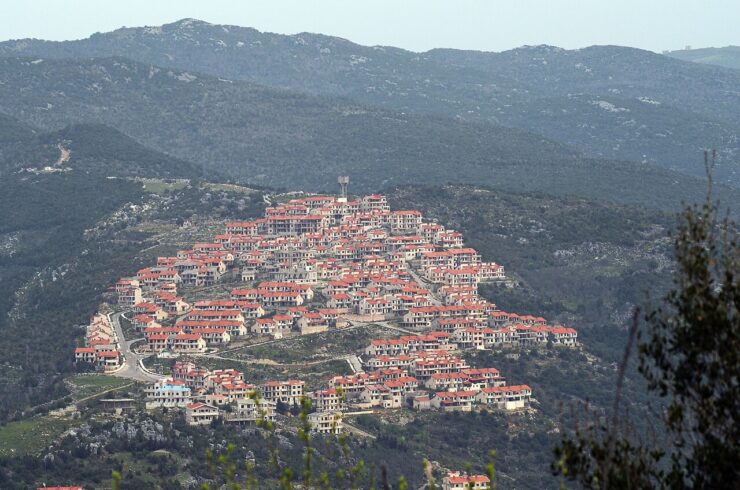
The 2004 Syrian census, conducted in September 2004 by the Central Bureau of Statistics, counted 17,920,844 people across Syria’s 14 governorates. It was the country’s last full population census; the next one planned for 2014 did not take place. The main dataset is available through the IHSN World Bank microdata catalogue and GHDx.
What was Syria’s population in the 2004 census?
Syria’s population at the 2004 census was 17,920,844, according to the General Census of Population and Housing 2004 carried out by the Central Bureau of Statistics (Syria) in September 2004. The figure is the official national total and remains the baseline for later population estimates. The count covered all 14 governorates of the Syrian Arab Republic and was published with demographic and housing indicators. It remains the last full population count, which is why researchers continue to cite the 2004 total when verifying older official figures. Because it was the last complete enumeration, the 2004 total remains the point of reference for population denominators in later demographic work.
How the 2004 count compares with 1994
The 2004 total of 17,920,844 represented a 30.02% increase over the previous census, held in 1994. The 1994 national total was about 13.78 million, equivalent to 13,783,144 people when calculated from the official 2004 figure and the 30.02% change. That increase added roughly 4.14 million people in ten years. Between the two censuses, Syria’s population grew at an average annual rate of about 2.7%. The 2004 round was the fifth in the census series that began in 1960; the 1994 round was the fourth.
| Census year | National population | Change from previous census |
|---|---|---|
| 1994 | 13,783,144 | — |
| 2004 | 17,920,844 | +30.02% (+4,137,700) |
The 14 governorates covered by the census
The 2004 census enumerated all 14 governorates of the Syrian Arab Republic as they were defined at the time. The list runs from Aleppo in the north to Quneitra in the south-west and includes both rural and urban governorates. The same 14 governorates were the primary reporting units for the census tables and for later statistical yearbooks.
| Governorate | Covered in 2004 census |
|---|---|
| Aleppo | Yes |
| Rif Dimashq | Yes |
| Damascus | Yes |
| Homs | Yes |
| Hama | Yes |
| Hasakah | Yes |
| Idlib | Yes |
| Deir ez-Zor | Yes |
| Latakia | Yes |
| Daraa | Yes |
| Raqqa | Yes |
| Tartus | Yes |
| Suweida | Yes |
| Quneitra | Yes |
What the census measured
The 2004 General Census of Population and Housing collected information beyond the total population count. The IHSN/World Bank catalogue record for study SYR_2004_PHC_v01_M lists the following thematic areas:
- households
- housing materials
- water supply
- education
- disabilities
- deaths in the household
- summary birth history
Labour force indicators were also part of the census output and informed later work on Syria’s labour force statistics. The listed topics cover household composition, housing conditions, water supply, education, disability, mortality and fertility, which are the main dimensions documented by the study metadata.
Where to consult the 2004 census dataset
The main catalogue records are the IHSN/World Bank Microdata Library and the Global Health Data Exchange. Study SYR_2004_PHC_v01_M is listed at https://microdata.worldbank.org/ ; the GHDx record titled “Syria Census 2004” is available at https://ghdx.healthdata.org/ and was last updated on 27 April 2026. Microdata access generally requires registration on the hosting platform. Both catalogue records document the study’s producers, sponsors and technical documentation. Researchers looking for the original census tables can consult the Central Bureau of Statistics publications, but the main digital access points for the microdata are the two catalogues named here.
Syria’s census history: why 2004 remains the benchmark
Syria held national censuses in 1960, 1970, 1981, 1994 and 2004. The 2004 round is the most recent full census. A further census planned for 2014 did not take place, leaving 2004 as the benchmark for official population figures. Post-2011 population figures used by the UN and other organisations are estimates, not census counts, and depend on methodologies and territorial control that differ from the 2004 enumeration. The census count does not measure displacement or refugees, which became central to statistical work only after 2011. Earlier censuses followed the administrative divisions current at each date; the 2004 total therefore reflects the population within the 14 governorates in force in that year. The resulting baseline still anchors work on Syria’s post-census economic and social crisis, and personal accounts such as a 113-year-old refugee’s memories of Syria before the 2011 conflict.
Frequently asked questions
When was the 2004 Syrian census conducted?
In September 2004.
What was the population of Syria in 2004?
17,920,844 people, according to the Central Bureau of Statistics.
How many governorates did Syria have in the 2004 census?
14 governorates, from Aleppo to Quneitra.
Was there a census in Syria after 2004?
No; the census planned for 2014 did not take place.
Who conducted the 2004 Syrian census?
The Central Bureau of Statistics (Syria).
Sources
- Central Bureau of Statistics (Syria), General Census of Population and Housing 2004.
- IHSN/World Bank Microdata Library, study SYR_2004_PHC_v01_M.
- GHDx (IHME), Syria Census 2004.

Published by